
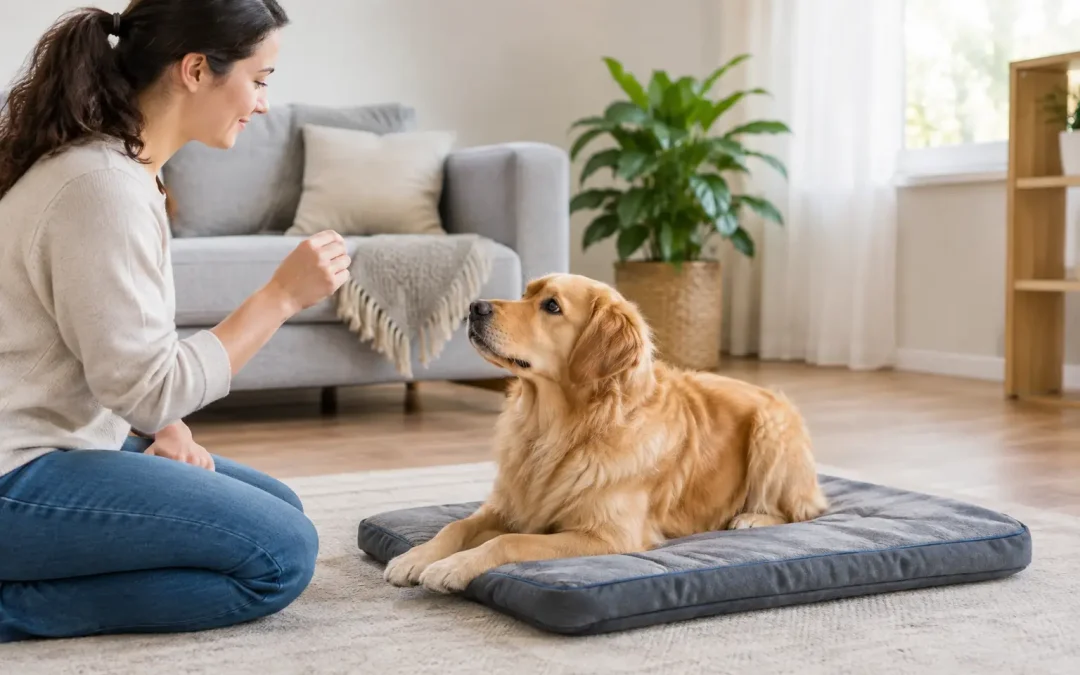
A mat can become one of the most useful places in your home. It gives your dog a clear job when dinner is being served, guests are arriving, children are playing, or the doorbell is ringing for the third time that afternoon. The goal is not simply to keep a dog out of the way. When you teach a dog to settle on a mat, you are building emotional control, household structure, and a reliable way for your dog to relax near the people they love.
For many families, this skill is far more practical than asking for a long down-stay in the middle of the room. A defined mat tells the dog exactly where to be. With patient repetition and clear expectations, it can become a familiar resting place rather than a punishment or a temporary restraint.
Why a Mat Settle Builds a Calmer Household
A proper settle means more than placing four paws on a bed for a few seconds. Your dog should be able to go to the mat, lie down, remain there with a loose body, and wait calmly until released. This is especially valuable for energetic adolescent dogs, excitable greeters, and dogs that shadow their owners from room to room.
The mat creates a predictable boundary. Dogs often become unsettled when they do not understand what is expected during busy moments. If the family is eating, carrying groceries inside, helping children with homework, or talking with visitors, the dog may pace, bark, jump, demand attention, or become overly involved. A well-trained mat settle replaces that uncertainty with a simple, familiar instruction.
It is also a useful foundation for therapy dog preparation. Dogs working around people must learn that calm presence matters just as much as obedience. They need to wait comfortably while activity happens nearby, without feeling the need to investigate every sound or movement.
Start With the Right Setup
Choose a mat that is large enough for your dog to lie down fully but not so oversized that its edges lose meaning. A flat bath mat, small dog bed, or folded blanket can work well. Use something stable that will not slide when your dog steps onto it. The same mat should be used consistently during the early stages so it develops a clear association with calm behavior.
Begin in a quiet room where your dog is comfortable. Avoid starting when they have just watched a squirrel through the window, heard a delivery at the door, or missed their usual exercise. A dog who is already over-aroused may be physically on the mat but mentally unable to settle.
Keep small, high-value food rewards available, along with a leash if your dog tends to wander away. The leash is not there to pull your dog onto the mat. It simply prevents rehearsal of leaving repeatedly while you are teaching a new expectation. Calm guidance is more effective than chasing, pleading, or repeating a command that the dog does not yet understand.
How to Teach a Dog to Settle on a Mat
Make the Mat Worth Choosing
Place the mat on the floor and allow your dog to notice it. The moment they look at it, step toward it, or place a paw on it, quietly mark that choice with praise such as “good” and reward them on the mat. Deliver the food low, between their front paws, so the reward encourages them to remain in place rather than spring back toward your hand.
At first, you are creating a simple idea: being on this surface pays. Do not rush to add a verbal cue. Let your dog make the connection through repeated success.
Reward Four Paws, Then a Down
Once your dog is readily stepping onto the mat, wait for all four paws to land there before rewarding. After several repetitions, encourage a down. You may use a food lure slowly from the dog’s nose toward the floor, or ask for a down if that cue is already reliable.
Reward the down position several times in a calm, unhurried rhythm. The first reward can come immediately, followed by another after one or two seconds. This helps your dog understand that lying quietly on the mat, not merely arriving there, is the behavior that earns reinforcement.
Add Your Cue
When your dog is consistently moving to the mat and lying down, introduce a cue such as “place,” “mat,” or “settle.” Say the word once as your dog begins moving toward the mat, then reward the completed behavior. Over time, say the cue before your dog starts moving so it becomes an instruction rather than a description.
Use one cue and keep it consistent. Repeating “settle, settle, settle” teaches many dogs that the first word is optional. Give the instruction once, allow a moment for your dog to respond, and then calmly help them succeed by reducing distance or distraction if needed.
Teach a Release Word
Every boundary needs a clear ending. Choose a release word such as “free,” “okay,” or “break.” After a few seconds on the mat, say the release word and invite your dog away. This teaches them that they do not decide when the exercise ends.
Without a release cue, some dogs begin popping up as soon as the reward is delivered. They may also become frustrated because they cannot predict whether they are expected to stay or leave. A clear release creates fairness and makes the settle more dependable.
Build Time Slowly
Increase duration in small, realistic increments. Ask for five calm seconds, then 10, then 20. Continue rewarding while your dog remains relaxed. If they stand up, do not scold or turn the moment into a conflict. Simply guide them back, make the next repetition easier, and reward success.
The goal is not to see how long you can withhold a reward. The goal is to teach calm endurance. As the behavior becomes stronger, rewards can become less frequent, but praise and a predictable release should remain part of the picture.
Add Everyday Movement
After your dog can settle in a quiet room, begin adding small distractions. Take one step away and return. Sit in a chair. Open a cabinet. Walk past the mat. Reward your dog for remaining composed.
Then practice in the situations where the skill will matter most: while you prepare a meal, when a family member enters the room, or before answering the door. Change only one challenge at a time. If you increase distance, noise, and activity all at once, many dogs will fail simply because the exercise became too difficult too quickly.
Use the Mat in Real Family Routines
A mat settle becomes valuable when it is practiced before a problem occurs. If your dog only hears “place” when company arrives, the cue may start to predict exciting or stressful events. Instead, use it during ordinary quiet moments as well. Ask for a short settle while you fold laundry, read, or make coffee.
For households preparing for a baby, the mat can help create safe, calm boundaries around feeding, floor time, and nursery routines. Start well before the baby arrives. The dog should not learn that the mat only appears when their access to the family suddenly changes.
For a dog that barks at visitors, begin with the mat far enough from the entryway that the dog can remain under threshold. Expecting an anxious or reactive dog to settle inches from the front door may be unrealistic at first. Distance, management, and gradual exposure are often necessary before the dog can make a good choice.
Common Mistakes That Slow Progress
One common mistake is using the mat only after the dog is already overwhelmed. A dog in a state of high excitement, fear, or frustration may not be capable of sustained calm behavior in that moment. Practice during easier periods so the response has a strong history before you rely on it around bigger triggers.
Another mistake is treating the mat as exile. Your dog should not be sent there in anger or left there for long periods without breaks, water, exercise, or interaction. The mat is a place for structured calm, not isolation. Dogs still need appropriate physical activity, mental engagement, affection, and opportunities to be part of the household.
Finally, be careful not to reward frantic behavior by giving attention each time your dog leaves the mat. Quietly return them, lower the difficulty, and reward the behavior you want. Consistency from every family member matters. Mixed rules make even a simple exercise confusing.
When Settling Is More Than an Obedience Issue
Some dogs cannot settle because they are struggling with more than a lack of training. Separation anxiety, generalized fear, compulsive pacing, resource guarding, pain, or aggression can make a mat exercise difficult or unsafe. If your dog stiffens, growls, panics, bites at the leash, cannot disengage from a trigger, or becomes increasingly distressed, stop escalating the exercise.
These situations call for an individualized behavior plan that considers the dog’s emotional state, history, environment, and safety needs. Ramella’s Canine Academy works with families in their home environment, where patterns around doors, visitors, children, meals, and daily routines can be assessed clearly. Professional guidance can help turn a seemingly simple obedience challenge into a plan that supports lasting behavioral change.
A settled dog is not a dog who has been shut down. It is a dog who understands the routine, feels secure in clear boundaries, and can rest while life happens around them. That quiet confidence is built one successful repetition at a time.