
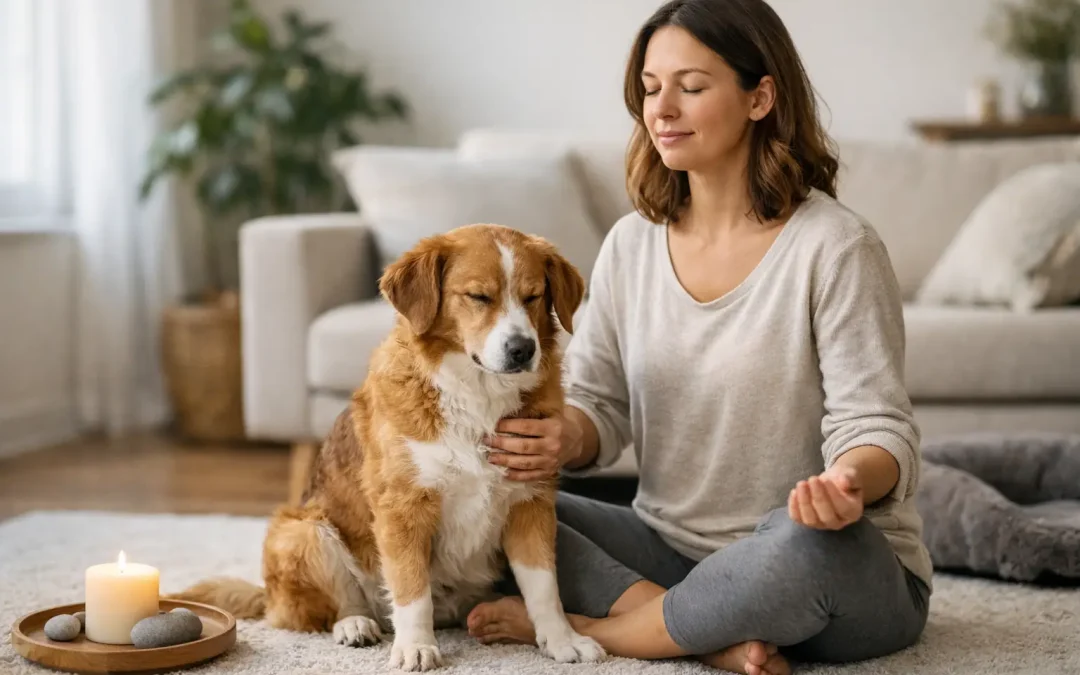
A dog pacing the hallway, panting when no one is exercising, or barking at every sound outside is not being difficult. That dog is communicating that their nervous system is overloaded. The most effective calming exercises for anxious dogs do not simply distract them for a moment. They create predictable patterns, give the dog a safe way to decompress, and help them look to their owner for clear guidance.
Anxiety can show up differently from one dog to another. Some dogs become restless and vocal. Others hide, tremble, lick obsessively, shut down around strangers, or react strongly on leash. The goal is not to force a worried dog to “get over it.” It is to build confidence carefully while maintaining the structure that helps a dog feel secure.
Why Calm Must Be Practiced
Dogs do not automatically know how to settle in a busy home. In Bergen County and New York City area households, there may be doorbells, delivery drivers, visitors, children coming and going, traffic sounds, and long stretches when a dog is alone. Without a routine and an outlet for physical and mental energy, a sensitive dog may stay in a constant state of alertness.
Calm is a skill. Like recall or leash manners, it improves through repetition in situations the dog can handle. Start exercises when your dog is relatively relaxed, not in the middle of a full panic response. If your dog is too distressed to take food, respond to a familiar cue, or remain still for even a few seconds, the situation is likely too difficult for training at that moment. Create more distance from the trigger and reduce the pressure.
Calming Exercises for Anxious Dogs That Build Trust
The settle-on-a-mat exercise
A designated mat, bed, or towel can become a clear signal that it is time to rest. Place it in a quiet area away from front windows, household traffic, and other predictable stressors. Lead your dog to the mat with a calm, familiar cue, then reward relaxed body language: a soft gaze, a lowered head, a hip rolled to one side, a sigh, or a full down position.
At first, reward frequently for only a few calm seconds. Gradually increase the time between rewards while you remain nearby. Keep sessions short and successful. The purpose is not to make your dog stay in place through fear. It is to teach that this spot is predictable, comfortable, and associated with safety.
Once the mat has value, use it during everyday low-pressure moments: while you prepare dinner, answer email, or sit down with a book. Later, it can support a more organized response when the household is active.
Slow, structured sniff walks
A rushed walk can leave an anxious dog more stimulated than settled. A slower walk with room to sniff, move at a manageable pace, and check in with the handler can have a very different effect. Sniffing is natural canine behavior and gives the dog information about their environment without requiring social interaction.
Choose quieter routes and times when possible. Keep the leash loose enough to avoid constant tension, while still maintaining control and safety. If your dog becomes watchful or begins scanning for triggers, pause at a comfortable distance and invite a simple check-in before moving on. A few minutes of successful, composed walking is more valuable than a long outing that pushes your dog past their limit.
This exercise depends on the dog. Some dogs relax outdoors; others are highly fearful of traffic, people, or other dogs. For the latter, begin in the yard, driveway, or another familiar location rather than insisting on a neighborhood walk.
Pattern games for predictable focus
Anxiety grows when the environment feels chaotic. Simple, repeated patterns help a dog understand what comes next. One useful practice is to walk several steps indoors or in a quiet outdoor space, stop, ask for a familiar cue such as sit, and reward the dog for responding calmly. Repeat at an easy pace.
The value is in the repetition, not in drilling commands. Your dog learns that paying attention to you leads to clarity and reinforcement. Keep your voice even, your movements unhurried, and your expectations realistic. A worried dog may need a few quiet repetitions before they can offer the same response they give when fully relaxed.
Avoid using rapid-fire commands when your dog is overwhelmed. Repeating “sit” or “stay” louder and louder can add pressure. Give one cue, allow a moment for the dog to process it, and make the environment easier if they cannot respond.
Search games that lower arousal
For many dogs, gently searching for food is more settling than high-energy play. Scatter a small portion of your dog’s meal across a clean, safe floor or a patch of grass, then allow them to find it at their own pace. You can also place a few pieces around a room in easy-to-find spots.
Keep this exercise simple. If a dog is worried, hiding treats under furniture or making the search difficult may create frustration rather than calm. The dog should succeed quickly and work with a relaxed body, not frantic intensity.
Use food thoughtfully. Dogs with dietary restrictions, resource guarding, or conflict around other pets should complete search games separately and under appropriate supervision. In multi-dog homes, a calm exercise should never create competition.
Hand target and quiet connection
A hand target is a gentle way to redirect attention without pulling on the leash or physically moving your dog. Present an open hand a few inches from your dog’s nose. When they touch it with their nose, calmly mark the behavior and reward. Repeat in a quiet space until the motion is familiar.
Over time, the hand target can help guide your dog away from a mild distraction, through a doorway, or toward their mat. It is especially useful because it gives an uncertain dog an easy, clear job. The exercise should feel cooperative, not urgent.
Pair these brief moments of training with quiet companionship. Sit nearby while your dog chews an appropriate item, rests on their mat, or watches the room from a comfortable distance. Not every anxious dog wants constant petting. Pay attention to their signals. A dog who turns away, stiffens, lip-licks, or moves off may need more space, not more affection.
Build a Routine That Supports the Exercises
Calming work is most successful when daily life is organized around it. Regular meal times, planned exercise, consistent household rules, and a dependable departure-and-return routine reduce uncertainty. This does not mean every day must be identical. It means the dog can generally predict how needs will be met and what behavior is expected.
Exercise matters, but more activity is not always the answer. A young, energetic dog may need a carefully structured outlet before they can settle. A dog with fear-based anxiety may become more reactive if they are repeatedly exposed to crowded parks or busy sidewalks. Match activity to the dog in front of you, including their age, health, temperament, and triggers.
For separation-related distress, practice tiny periods of calm independence before attempting longer absences. A dog who panics within minutes of an owner leaving needs a gradual plan, not a sudden test of endurance. Keep departures low-key, avoid emotional goodbyes, and make sure the dog has been given an appropriate opportunity to exercise and eliminate beforehand.
When Home Exercises Are Not Enough
Calming exercises can support meaningful progress, but they are not a substitute for professional assessment when anxiety is severe. Seek help promptly if your dog is attempting to escape, destroying doors or crates, injuring themselves, snapping when frightened, refusing food for extended periods, or showing obsessive behaviors such as nonstop pacing or licking.
A sudden behavior change also deserves a veterinary conversation. Pain, thyroid conditions, sensory changes, gastrointestinal discomfort, and other medical concerns can contribute to anxiety-like behavior. Addressing health and behavior together gives the dog the best chance to improve.
Dogs with aggression, phobias, intense separation anxiety, or serious reactivity need a plan tailored to their home, triggers, and family routines. Ramella’s Canine Academy provides in-home behavior modification so owners can practice calm leadership where the problem is actually happening, whether that is at the front door, on the stairs, during departures, or around visitors.
Your dog does not need a perfect day to make progress. A quieter walk, one successful rest on the mat, or a brief check-in before a trigger can become the beginning of a steadier routine. With patient repetition, clear expectations, and compassionate guidance, calm can become something your dog recognizes, trusts, and chooses.