
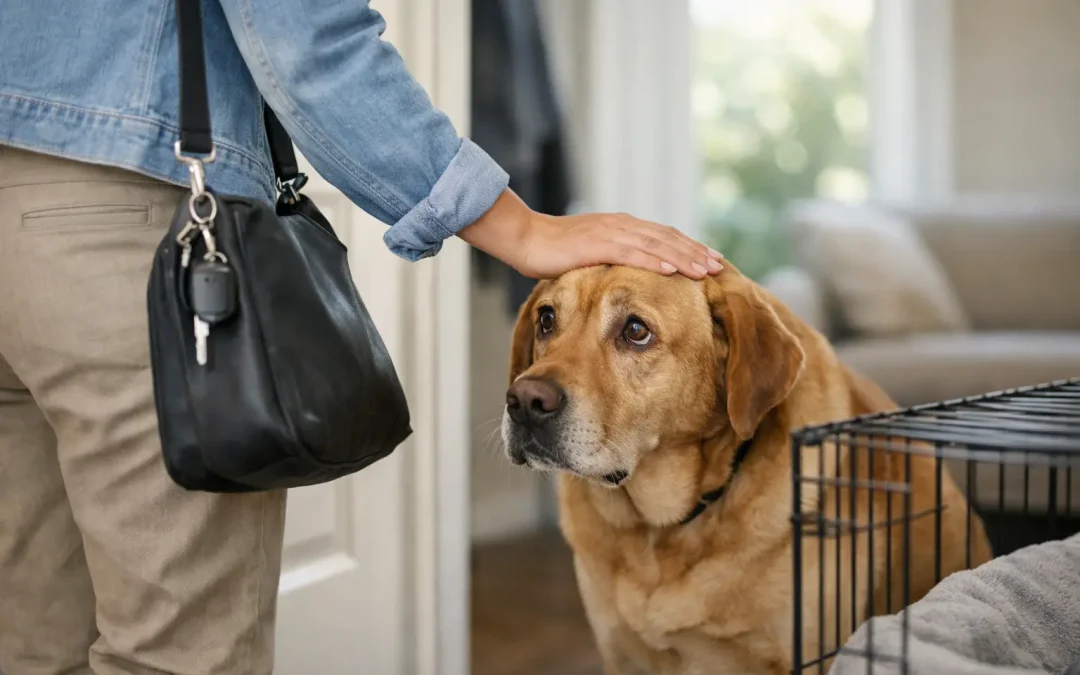
A dog who panics when left alone is not being stubborn or trying to punish the family. They may howl until they are hoarse, scratch through a door, pace, drool, eliminate indoors, or destroy the very items that carry their owner’s scent. To stop dog separation anxiety, the goal is not simply to make a dog tolerate being alone longer. It is to change the emotional response to departure while building a household routine that feels clear, safe, and predictable.
For many families, the problem becomes visible after a move, a schedule change, a new baby, an adoption, an illness, or a long period of working from home. The behavior may also have been developing quietly for months. A dog can appear calm while an owner gets ready, then unravel within minutes of hearing the door close.
Separation Anxiety Is Not Just Bad Behavior
Separation anxiety is a distress response connected to being away from a specific person or from the household. It is different from a dog who is bored, under-exercised, frustrated by confinement, or reacting to noises outside the home. Those problems can overlap, which is why an accurate assessment matters.
A dog with true separation anxiety often shows intense behavior shortly before or immediately after departure. Common signs include frantic following from room to room, trembling when shoes or keys come out, vocalizing, destructive behavior around exits, attempts to escape, drooling, refusal to eat when alone, and accidents despite reliable housebreaking.
A camera can provide valuable information. Watch for the timing and pattern of the behavior. Does your dog settle after 15 minutes, or remain in a state of distress for the entire absence? Does the reaction happen only in a crate, only when one family member leaves, or whenever the home is empty? These details help distinguish anxiety from a training or management issue.
Sudden changes also deserve veterinary attention. Pain, cognitive changes, digestive problems, hearing loss, and other medical concerns can affect behavior. A thoughtful plan begins by making sure the dog is physically well.
Why Punishment Makes Anxiety Worse
Coming home to chewed trim, shredded bedding, or complaints from neighbors can be upsetting. Still, correcting a dog after the fact does not connect the correction to what happened hours earlier. More importantly, a fearful dog may begin to associate an owner’s return with tension rather than relief.
Separation anxiety is not resolved through scolding, intimidation, or forcing a dog to stay in panic until they “get used to it.” Repeated full-intensity distress can deepen the association between being alone and feeling unsafe. Compassion does not mean lowering expectations. It means setting expectations a dog can understand and progress through successfully.
Clear obedience, appropriate boundaries, meaningful exercise, and calm leadership can all support the process. But they must be paired with departure training that stays below the dog’s panic threshold.
How to Stop Dog Separation Anxiety With a Plan
The most effective plans are gradual and specific to the dog in front of you. A dog who can remain calm for 30 seconds alone needs a different starting point than a dog who settles for 20 minutes but panics after hearing hallway noise.
Build a predictable daily rhythm
Dogs benefit from a routine that includes physical activity, mental engagement, meals, rest, and calm interaction. Exercise is not a complete treatment for separation anxiety, but a dog with unspent energy can have a harder time settling. The right amount depends on age, health, breed tendencies, and temperament. A young, active dog may need structured walks and conditioning, while an older dog may benefit from gentler movement and scent-based activity.
Avoid making departure the most dramatic moment of the day. A calm morning routine, a chance to eliminate, and a period of decompression before leaving can reduce unnecessary arousal. Likewise, arrivals should be warm but composed. Wait for four paws on the floor and a calmer state before offering full attention.
Practice independence while you are home
Many anxious dogs have learned that being physically close to a family member is the only way to feel secure. Begin teaching peaceful separation in very small, manageable moments. Ask your dog to settle on a bed or mat while you move around the room. Step briefly into another room and return before anxiety rises. Gradually create more distance and duration only when your dog remains relaxed.
This is not about ignoring a dog’s need for connection. It is about helping them learn that connection remains secure even when they are not touching, following, or watching their person every second.
A calm place cue can be especially useful in a busy home. It gives the dog a familiar job during meal preparation, school pickups, visitors, or a baby’s nap time. The skill should be taught positively and practiced when life is quiet, not introduced for the first time as the family rushes out the door.
Change the meaning of departure signals
Dogs are excellent observers. Picking up keys, putting on work shoes, packing a bag, applying makeup, or turning off a television can become warnings that panic is coming.
Practice these cues without leaving. Pick up your keys, then sit down and read. Put on your shoes, then make coffee. Open and close the front door, then return to normal household activity. The purpose is to weaken the dog’s learned connection between these signals and a long absence.
Keep sessions brief and unemotional. If your dog starts pacing, whining, panting, or staring intensely, the exercise is too difficult at that stage. Return to an easier step where they can succeed.
Use gradual absences, not big tests
The training process usually starts with absences short enough that the dog stays calm. That could mean stepping outside for a few seconds, closing an interior door, or walking to the mailbox. Return quietly before distress begins, then repeat with carefully adjusted intervals over time.
Progress is rarely perfectly linear. A dog may do well one day and struggle the next because of storms, construction noise, a missed walk, visitors, or an unusually stimulating morning. When that happens, reduce the difficulty rather than pushing ahead. Consistency matters more than speed.
During the training period, avoid leaving the dog alone longer than they can currently handle whenever possible. Families may need to coordinate schedules, use a trusted caregiver, or arrange appropriate daytime support. This management is not a permanent crutch. It protects the training process from repeated panic episodes.
Choose confinement thoughtfully
A crate helps some dogs rest, but it can make separation anxiety worse for dogs who panic when confined. Signs of serious crate distress include biting bars, breaking teeth or nails, frantic escape attempts, and self-injury. In those cases, a larger dog-proofed room, exercise pen, or gated area may be safer while the underlying anxiety is addressed.
The right setup depends on the individual dog and the home. Safety comes first. Remove hazards, secure windows and exits, and avoid leaving collars or items that could catch on furniture when a dog is unattended.
When Professional Behavior Support Is Needed
Professional help is especially important when a dog injures themselves, causes significant property damage, vocalizes for extended periods, cannot be left alone even briefly, or has a history of fear, aggression, phobias, or compulsive behavior. Severe cases may also require collaboration between a qualified trainer and a veterinarian, including discussion of medication when clinically appropriate. Medication is not a shortcut, but for some dogs it can lower overwhelming distress enough for learning to take place.
In-home training can be particularly helpful because separation anxiety happens in the home, around the exact doors, rooms, routines, sounds, and family patterns that trigger it. Ramella’s Canine Academy works with families to assess the full picture, establish practical structure, and create a behavior plan that fits daily life rather than a generic class schedule.
A Calmer Home Starts With Small Successes
Your dog does not need to prove they can handle a full workday alone tomorrow. They need repeated experiences of feeling safe during short, successful separations today. With patient progression, clear household expectations, appropriate activity, and skilled support when needed, anxious dogs can learn that a closed door is temporary and that their family always comes back.