
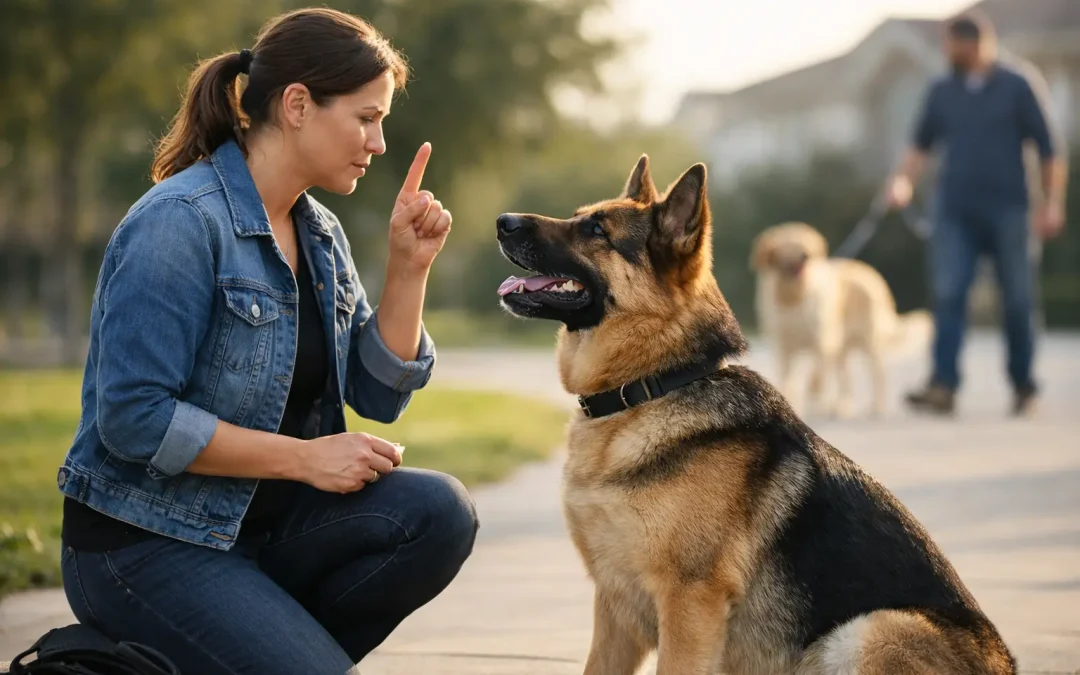
A dog who pulls toward every doorway, ignores recall in the yard, or becomes unsettled when visitors arrive is not “too old” to learn. Adult dog obedience training gives that dog a clear, fair way to understand what is expected – and gives the family a practical path back to calm, control, and connection.
Many owners wait to seek help because their dog was adopted as an adult, because old habits seem firmly established, or because a previous class did not carry over at home. The truth is that adult dogs can learn exceptionally well when instruction is consistent, expectations are clear, and training takes place in the environments where daily life actually happens.
Why Adult Dogs Need More Than Basic Commands
Obedience is often reduced to sit, down, and stay. Those commands matter, but a well-trained adult dog also knows how to settle, wait at thresholds, walk without dragging the handler, respond around distractions, and accept direction when excitement or uncertainty rises.
These skills are not about making a dog robotic. They create predictability. A dog who understands how to respond when the doorbell rings, a child drops food, or another dog appears on a walk has less need to make decisions from impulse, fear, or frustration.
For families, that clarity changes the atmosphere of the home. Mealtimes become easier. Walks become less stressful. Guests can enter without a scramble. Just as importantly, the dog learns that its owner can provide steady leadership in situations that once felt confusing.
Behavior and Obedience Are Closely Connected
Disobedience is sometimes a training gap, but it can also be part of a larger behavioral picture. A dog that refuses to come when called may be over-aroused outdoors. A dog that barks continuously at windows may be anxious, territorial, under-exercised, or rehearsing a habit that has become self-rewarding. A dog that reacts on leash may be fearful rather than defiant.
That distinction matters. Repeating a command more loudly will not resolve fear, separation anxiety, phobias, aggression, or obsessive behaviors. Those concerns require a careful assessment of triggers, routines, handling, exercise, and the dog’s relationship with the people in the household. Obedience supports behavior modification, but the plan must fit the reason behind the behavior.
What Adult Dog Obedience Training Looks Like at Home
Training is most useful when it addresses the moments that challenge a family every day. An in-home approach can work on the front door where greetings get chaotic, the living room where a dog guards space or barks at passing activity, and the neighborhood route where leash manners fall apart.
Early sessions commonly establish a communication system between dog and owner. The dog learns how to respond to a cue the first time, how to follow through calmly, and how to earn freedom through appropriate behavior. Owners learn timing, body position, leash handling, and how to avoid accidentally rewarding the behaviors they want to change.
Structure does not mean constant correction or a joyless household. It means routines that make sense to the dog. Waiting before going outside, settling before receiving attention, and walking politely before reaching a sniffing spot are small expectations with a powerful cumulative effect. The dog begins to see that calm behavior opens access to the things it enjoys.
The Core Skills That Improve Daily Life
A personalized program may include loose-leash walking, reliable recall, place work, stays, polite greeting behavior, and calm responses to household activity. The exact order depends on the dog and the family. A social, energetic dog may need stronger impulse control around visitors, while a timid dog may first need confidence-building guidance and safe exposure to everyday triggers.
Place work is especially valuable in busy homes. It teaches a dog to remain calmly on a designated bed or platform while meals are served, packages arrive, or children move through the room. This is not isolation. It gives the dog a defined job during moments that might otherwise lead to jumping, barking, pacing, or anxious monitoring.
Recall also deserves more attention than many owners realize. A reliable come command is a safety skill, not a casual request. It should be built gradually and practiced under increasing distraction, never used only when playtime is about to end or something unpleasant is about to happen.
Consistency Matters More Than a Dog’s Age
Adult dogs arrive with learning histories. Some have spent years pulling on leash because pulling got them where they wanted to go. Others were never shown how to settle indoors. A recently adopted dog may still be adjusting to an entirely new set of people, sounds, rules, and expectations.
None of this prevents progress. It simply means the training plan needs patience and consistency. A dog cannot understand that jumping is unacceptable with grandparents but allowed with one family member after work. Mixed messages prolong the problem, particularly with intelligent, energetic, or sensitive dogs.
Consistency also includes exercise and mental engagement. A dog that has not had an appropriate outlet for energy may struggle to focus, rest, or control impulses. The right amount of activity varies by age, health, breed tendencies, and individual temperament. More exercise is not always the answer for an anxious or highly aroused dog, but inadequate exercise can certainly intensify unwanted behavior.
When Professional Guidance Is Especially Valuable
Owners should not wait for a situation to become dangerous or exhausting before asking for help. Professional guidance can be particularly helpful when a dog growls, snaps, bites, guards food or objects, panics when left alone, reacts strongly to people or dogs, or cannot settle despite regular effort and routine.
These concerns should be handled with calm seriousness. Punishing warning signals such as growling can suppress communication without resolving the discomfort beneath it. A qualified trainer evaluates the full context: what happens before the behavior, how people respond, whether the dog can recover, and what management is needed to keep everyone safe while training progresses.
For households with children, clear obedience has an added value. Children should not be responsible for directing or correcting a dog, but adults can use structure to prevent avoidable conflict. A dog with a practiced place command, respectful boundaries around food, and reliable response to the adults is easier to manage during busy family transitions.
Ramella’s Canine Academy brings this work into the home because real-life training should hold up in real-life conditions. More than a collection of commands, the goal is a dog that understands its place in the family and an owner who feels capable of providing steady guidance.
Building a Relationship That Holds Up Under Pressure
The best obedience training does not depend on constant treats, repeated commands, or physical strength. It rests on communication, follow-through, trust, and fair expectations. Dogs thrive when they know what behavior is expected and can rely on their owners to be consistent.
Progress is rarely a straight line. A dog may respond beautifully in the kitchen and struggle on a crowded sidewalk. That is normal. Skills must be practiced in stages, with distractions introduced thoughtfully rather than all at once. Success comes from building reliability where the dog is today, then extending that reliability into more challenging situations.
An adult dog does not need a perfect past to become a steady companion. With compassionate instruction, appropriate boundaries, and a plan tailored to the household, meaningful change can begin at any age. The most encouraging moment is often not a flawless command, but the first time a dog pauses, looks to its owner for direction, and chooses calm over chaos.