
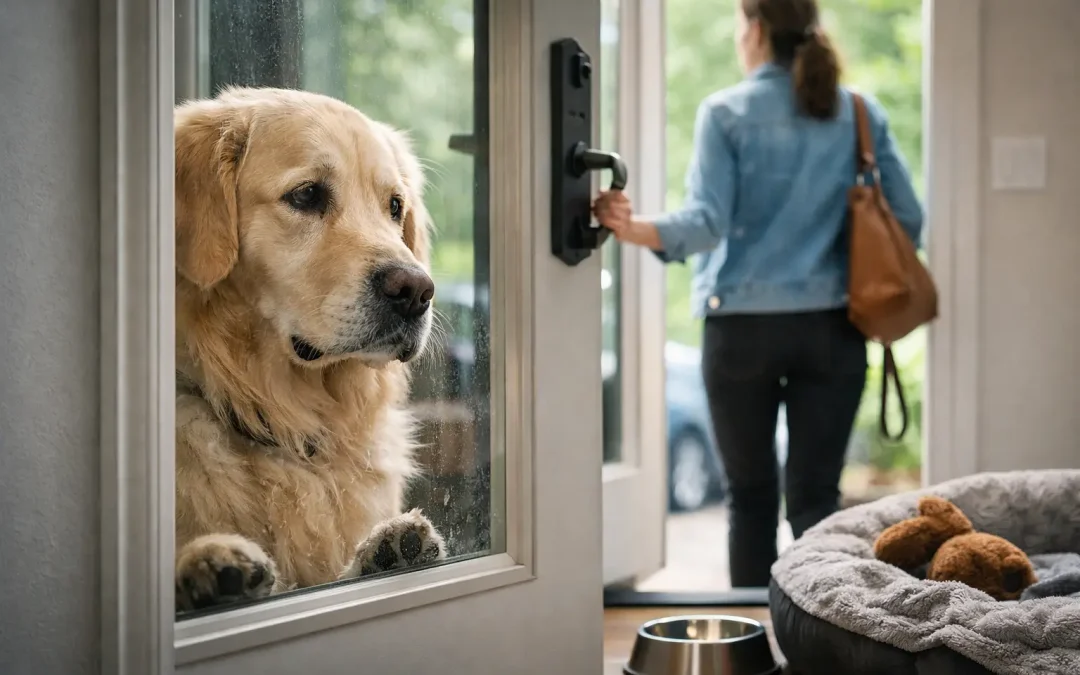
The chewed doorframe, nonstop barking, indoor accidents, or frantic pacing are not signs that your dog is trying to punish you for leaving. They may be signs of real distress. Learning how to stop dog separation anxiety begins with recognizing that your dog needs more than a distraction while you are gone. They need a gradual plan that builds safety, confidence, structure, and trust.
Separation anxiety can be exhausting for a family and deeply uncomfortable for the dog experiencing it. The good news is that improvement is possible. It takes consistency, careful observation, and a pace your dog can handle without becoming overwhelmed.
Recognize Separation Anxiety, Not Just Misbehavior
Dogs can bark, chew, dig, or have accidents for many reasons. An under-exercised adolescent dog may become destructive from boredom. A dog who hears every hallway sound may bark because of environmental triggers. Separation anxiety is different: the behavior is tied specifically to being left alone or separated from a particular person.
Common signs include vocalizing shortly after you leave, scratching at doors or windows, destroying exit areas, pacing, drooling, refusing food when alone, or attempting to escape a crate or room. Some dogs shadow their owners from room to room and become unsettled the moment they see shoes, keys, a work bag, or a coat.
A phone or home camera can provide useful information. Watch what happens in the first 15 to 30 minutes after departure. Does your dog settle after a few minutes, or do they remain panicked? This distinction helps determine whether the issue is mild discomfort, a routine problem, or a more serious anxiety response that needs professional behavior modification.
Rule Out Medical and Environmental Causes
Before starting a behavior plan, consider whether there has been a change in your dog’s physical health or daily environment. Pain, digestive upset, age-related cognitive changes, hearing loss, and urinary conditions can all affect behavior when a dog is alone. A veterinary examination is especially important if anxiety appears suddenly or an otherwise house-trained dog begins having accidents.
Then look closely at the daily routine. A dog left alone for long stretches without an appropriate outlet for exercise, toileting, training, or rest may have trouble settling. This does not mean exercise alone will cure separation anxiety. A tired dog can still be anxious. But predictable activity, mental engagement, and a calm household rhythm create the foundation that behavior work needs.
How to Stop Dog Separation Anxiety With Gradual Absence Training
The heart of separation-anxiety training is teaching your dog, in small successful steps, that departures are safe and reunions are dependable. The goal is not to make a dog “get used to” panic by leaving them distressed for longer periods. Repeated panic can make the problem stronger.
Start below your dog’s anxiety threshold. For some dogs, that may mean standing up, picking up your keys, walking to the door, or stepping outside for only a few seconds before returning. If your dog begins panting, whining, rushing the door, or refusing food, the step was too difficult. Make the next repetition easier.
Practice departures that are brief enough for your dog to stay calm. Return quietly, without turning every arrival into an exciting event. Over many repetitions, gradually add time only when your dog is consistently relaxed at the current level. Progress is rarely perfectly straight. A busy week, a thunderstorm, visitors, or changes in schedule can require you to reduce the difficulty temporarily.
Separate Departure Cues From Your Actual Departure
Many anxious dogs react before their owner has even left. They learn that keys, shoes, makeup, a work bag, or a certain jacket predict isolation. Begin breaking that association during calm moments. Pick up your keys, then sit on the couch. Put on shoes and make coffee. Open and close the front door, then remain inside.
These simple rehearsals teach your dog that every familiar cue does not lead to a long absence. Keep your body language neutral and avoid repeatedly reassuring a worried dog in a tense voice. Calm, clear handling gives your dog better information than anxious negotiation.
Build Independence While You Are Home
A dog who must be in constant physical contact with a family member may struggle more when that person leaves. Independence training does not mean withholding affection. It means helping the dog rest comfortably at a small distance.
Use a bed, mat, or designated resting area in the same room while you read, prepare meals, or work. Reward calm settling. Once your dog can relax there, briefly move around the house, then return before concern builds. Later, practice short periods behind a baby gate or in another room if your dog remains comfortable.
The skill you are building is not isolation. It is the ability to settle without constant supervision.
Create a Departure Routine That Supports Calm
A predictable routine can lower arousal before you leave. Give your dog enough time for a bathroom break and an appropriate walk or structured activity before a longer absence. For many dogs, a focused walk with opportunities to sniff, followed by a short obedience session, is more settling than a rushed, high-energy outing.
Offer a safe food puzzle or long-lasting chew only if your dog can enjoy it while alone. A dog in significant distress often will not eat, which is useful information rather than a training failure. Do not rely on treats to cover anxiety that is already beyond your dog’s coping ability.
Your dog’s confinement area also matters. Some dogs settle best in a quiet room with a bed and limited visual access to windows. Others are comfortable in a crate only if the crate has already been carefully conditioned as a peaceful resting place. A crate is not automatically the right answer. If a dog is biting bars, damaging teeth, or panicking inside, confinement may be increasing the problem and should be reassessed.
Avoid dramatic goodbyes. A simple, consistent departure is easier for a worried dog to understand. When you return, greet your dog warmly once they can offer a calmer response, then move into the normal household routine.
Give Clear Structure Throughout the Day
Separation anxiety does not exist in a vacuum. Dogs benefit from clear expectations around walks, rest, greetings, feeding, and obedience. Structure reduces uncertainty, and reduced uncertainty often supports a more settled state of mind.
Practice foundational cues such as sit, down, place, stay, come, and loose-leash walking using fair, consistent guidance. These exercises are not meant to suppress emotion. They create communication between dog and owner, helping the dog understand how to respond when excitement or uncertainty rises.
Be thoughtful about accidental reinforcement. If your dog barks when you step into another room and you immediately return every time, the barking may begin to function as a way to bring you back. Instead, set up practice at an easier level where your dog can remain calm and be rewarded for that calm behavior. The timing of your response matters.
Know When Professional Help Is Needed
Severe separation anxiety can involve self-injury, escape attempts, intense vocalization, destructive behavior, and panic that begins within moments of departure. These cases deserve prompt professional support. The longer a dog rehearses panic, the more entrenched the pattern can become.
A qualified trainer experienced in behavior modification can observe the dog in the home environment, identify triggers, and create a plan that fits the family’s actual schedule. In some cases, collaboration with a veterinarian or veterinary behavior professional is appropriate, particularly when anxiety is severe enough that the dog cannot remain under threshold during early training.
For families in Bergen County, Manhattan, and the surrounding New Jersey and New York metro area, Ramella’s Canine Academy provides personalized in-home guidance for separation anxiety and other serious behavior concerns. Working where the problem occurs allows training to address the real departure routine, household layout, and family dynamics rather than a simplified version of them.
Be Patient With the Dog in Front of You
A dog recovering from separation anxiety is learning that being apart does not mean being abandoned. That lesson cannot be rushed, but it can be taught with compassionate consistency, appropriate boundaries, and a plan that protects your dog’s sense of safety. Each calm minute alone is meaningful progress toward a more peaceful home and a stronger lifelong bond.